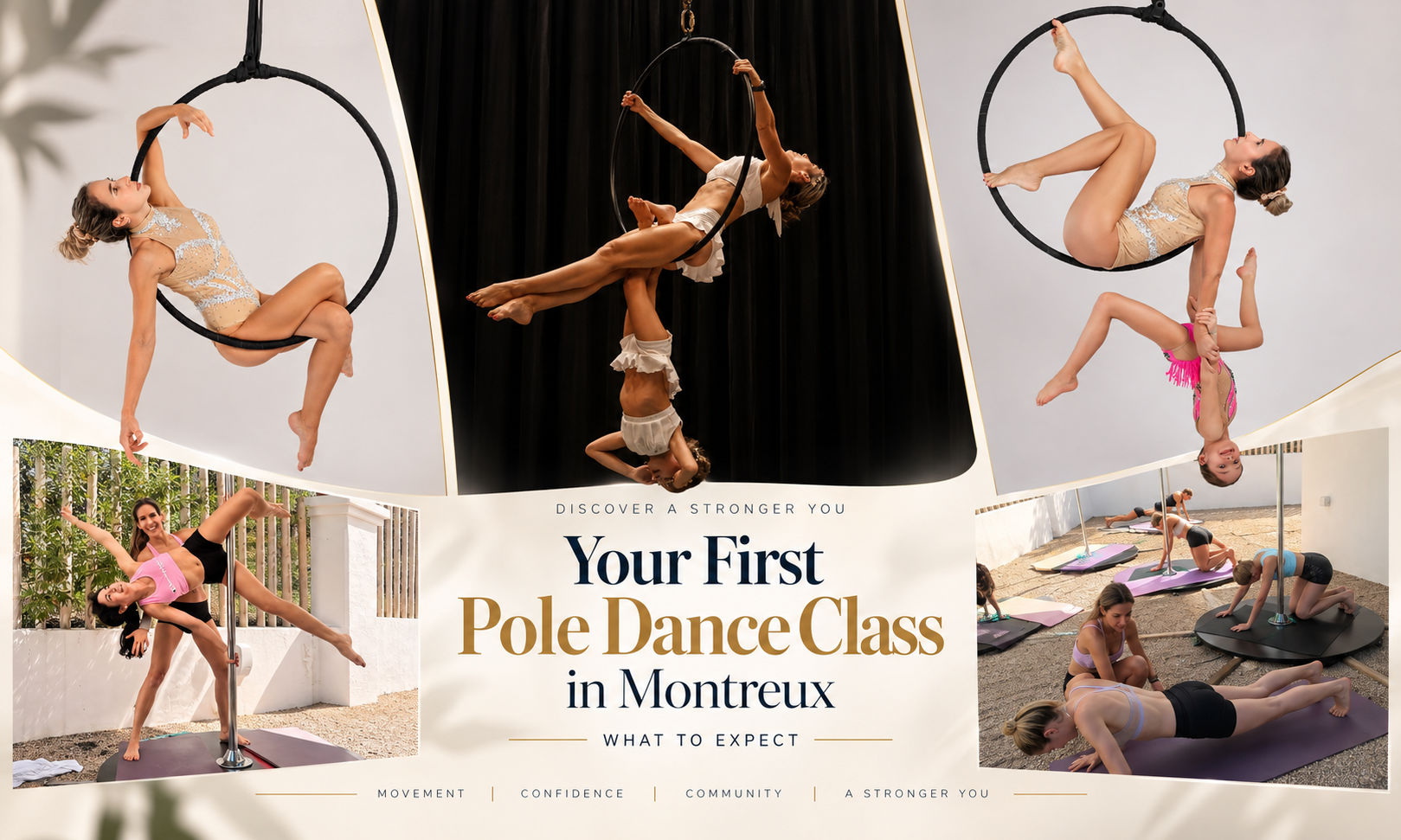
Have you ever watched a pole dance performance and thought, “I would love to try that, but I'm probably not strong enough?”
You're not alone.
Starting something new can feel intimidating, especially when you see advanced spins, climbs, flexibility tricks and impressive aerial movements online.
But your first Pole Dance class in Montreux doesn't begin with advanced tricks.
It begins with learning the fundamentals, understanding how your body moves and discovering what you are capable of.
At Free Spirit Pole Dance, beginners can start progressively without needing previous pole dance or dance experience. The studio offers Pole Dance, Pole Fitness and aerial disciplines for different levels. (Free Spirit Pole Dance)
Whether you're looking for a new fitness activity, want to improve your strength and flexibility, or simply want to try something completely different, your first class can be the beginning of an exciting new journey.
Yes.
You don't need to arrive at your first class already knowing how to spin, climb or perform an inversion.
You also don't need to be an experienced dancer.
Pole Dance is a skill-based activity, which means you develop your abilities progressively through practice.
Your first classes may focus on:
Basic pole grips
Simple spins
Walking around the pole
Body positioning
Coordination
Core engagement
Strength exercises
Flexibility and mobility
Basic transitions
As you become more comfortable, your instructor can introduce new movements and combinations.
The goal isn't to master everything in your first class.
The goal is to learn, move and enjoy the process.
Wondering what actually happens when you arrive at the studio?
Here's a typical beginner-friendly structure.
Your instructor will introduce the class and explain the basic principles of pole training.
You'll learn how to approach the pole safely and how different grips and body positions work.
This is also a good opportunity to ask questions if you've never tried pole dance before.
Before working on pole movements, you'll normally start with a warm-up.
The purpose is to prepare your muscles and joints for movement.
A warm-up may include:
Gentle cardio
Shoulder movements
Wrist preparation
Hip mobility
Leg movements
Core activation
Dynamic stretching
This is where the fun begins.
Your instructor will introduce movements appropriate for your level.
You might learn a basic spin or a simple movement around the pole.
Don't worry if it feels unusual at first.
Your body is learning a completely new movement pattern.
You'll then have time to repeat the movement.
This is one of the most important parts of pole training.
Your first attempt may feel completely different from your fifth attempt.
With repetition, you'll begin to understand how to use your grip, momentum, legs and core together.
Many classes finish with stretching or mobility work.
This gives you time to gradually bring the session to an end while continuing to work on flexibility and body awareness.
This is one of the biggest concerns beginners have.
No.
You don't need to be extremely strong before joining a beginner Pole Dance class.
Strength is something you develop through training.
At Free Spirit Pole Dance, the training philosophy focuses on progressive development rather than expecting beginners to arrive already prepared. The studio describes Pole Dance as a full-body workout involving strength, coordination, mobility and muscular control. (Free Spirit Pole Dance)
Over time, pole training can help you work on:
Grip strength
Upper-body strength
Core strength
Leg strength
Balance
Coordination
Body awareness
Flexibility
Your first class isn't a test of how strong you are.
It's simply your starting point.
Not at all.
Pole Dance combines elements of fitness, movement, dance and aerial skills, but beginners don't need previous dance training.
You can learn:
Technique → Strength → Coordination → Flow → Choreography
step by step.
As you become more confident, you can explore more artistic forms of pole dance, including choreography, musicality and performance.
This is one reason Pole Dance can be so rewarding: there is always another skill or movement to learn.
Choosing the right clothing can make your first class more comfortable.
For many beginner pole classes, shorts and a comfortable fitted top are practical because exposed skin helps create grip against the pole.
You generally don't need expensive specialist clothing for your first session.
A simple outfit can be enough.
Comfortable shorts
Sports bra or fitted top
Comfortable underwear
Hair tied back if needed
Water bottle
Heavy body lotion immediately before class
Very loose clothing that makes movement difficult
Excessively slippery fabrics
Your instructor can also advise you about clothing depending on the type of class you're attending.
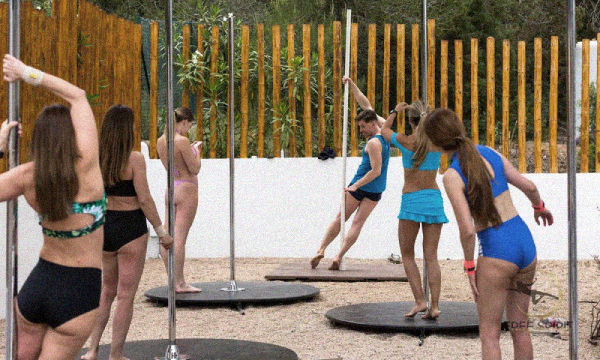
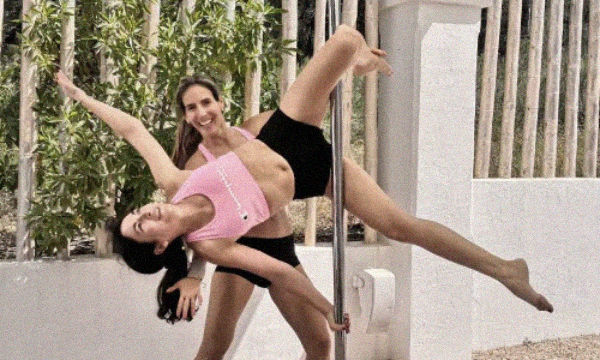
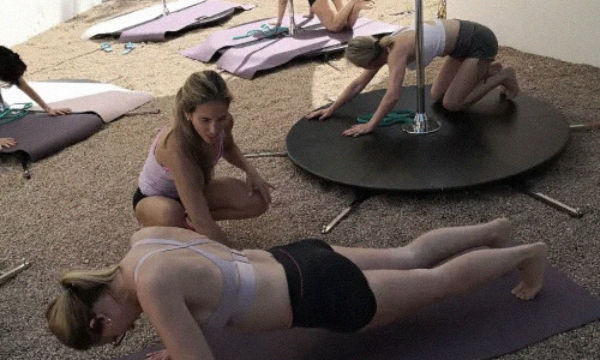
Your exact class content depends on your level and instructor, but beginner training commonly introduces foundational movements.
These can include:
You'll learn how to create controlled movement around the pole.
Walking around the pole teaches you how to coordinate your body with the apparatus.
Once you're ready, climbing introduces a new level of strength and coordination.
You'll begin connecting individual movements together.
You'll learn how small changes in your posture and positioning can make movements look and feel completely different.
The important thing is that you don't have to learn everything immediately.
One movement at a time.
Pole Dance can be a demanding full-body activity.
It combines physical skills with coordination and movement, and Free Spirit describes its Pole Dance training as engaging multiple muscle groups while developing strength, coordination and fitness. (Free Spirit Pole Dance)
Depending on the class, you may work on:
This makes Pole Fitness an alternative to repetitive workout routines for people who enjoy learning skills while exercising.
That's completely normal.
Most beginners have questions before their first class:
“What if everyone else is better than me?”
“What if I can't do anything?”
“What if I look silly?”
The reality is that everyone starts somewhere.
A good beginner environment should allow you to learn without feeling pressured to perform at an advanced level.
At Free Spirit Pole Dance, the studio emphasizes progressive learning, professional instruction and an inclusive environment for students at different levels. (Free Spirit Pole Dance)
Your first class isn't about comparing yourself with someone who has been training for years.
It's about discovering your own starting point.
One of the advantages of pole training is that movements can progress over time.
A beginner might start with basic spins and conditioning.
An intermediate student might work on:
More advanced spins
Climbs
Inversions
Transitions
Combinations
Flexibility
Advanced students can explore more complex tricks, choreography and performance.
This creates a natural progression:
You don't have to decide where you'll end up on your first day.
Just start where you are.
If you enjoy your first pole experience, you may also want to explore another aerial discipline.
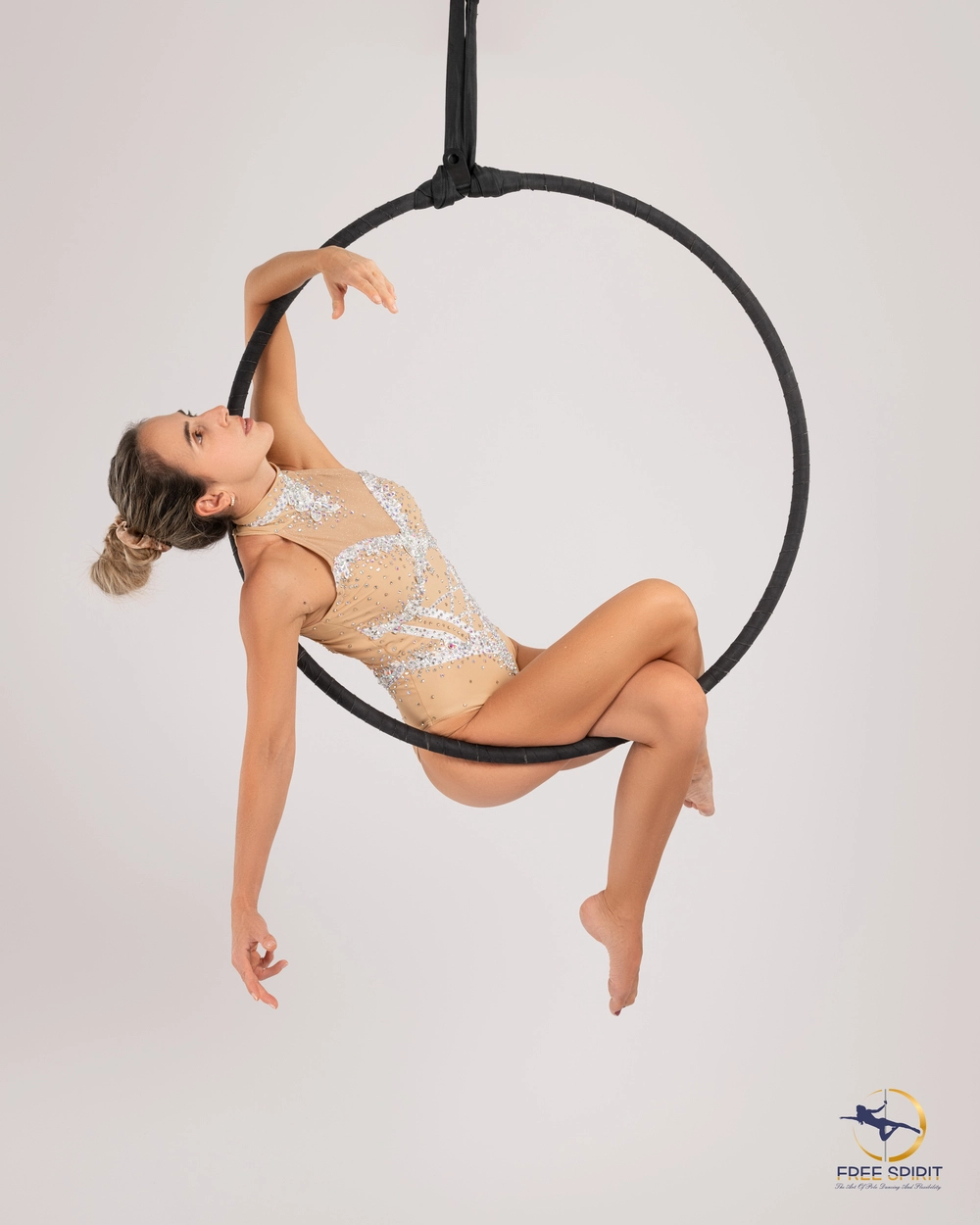
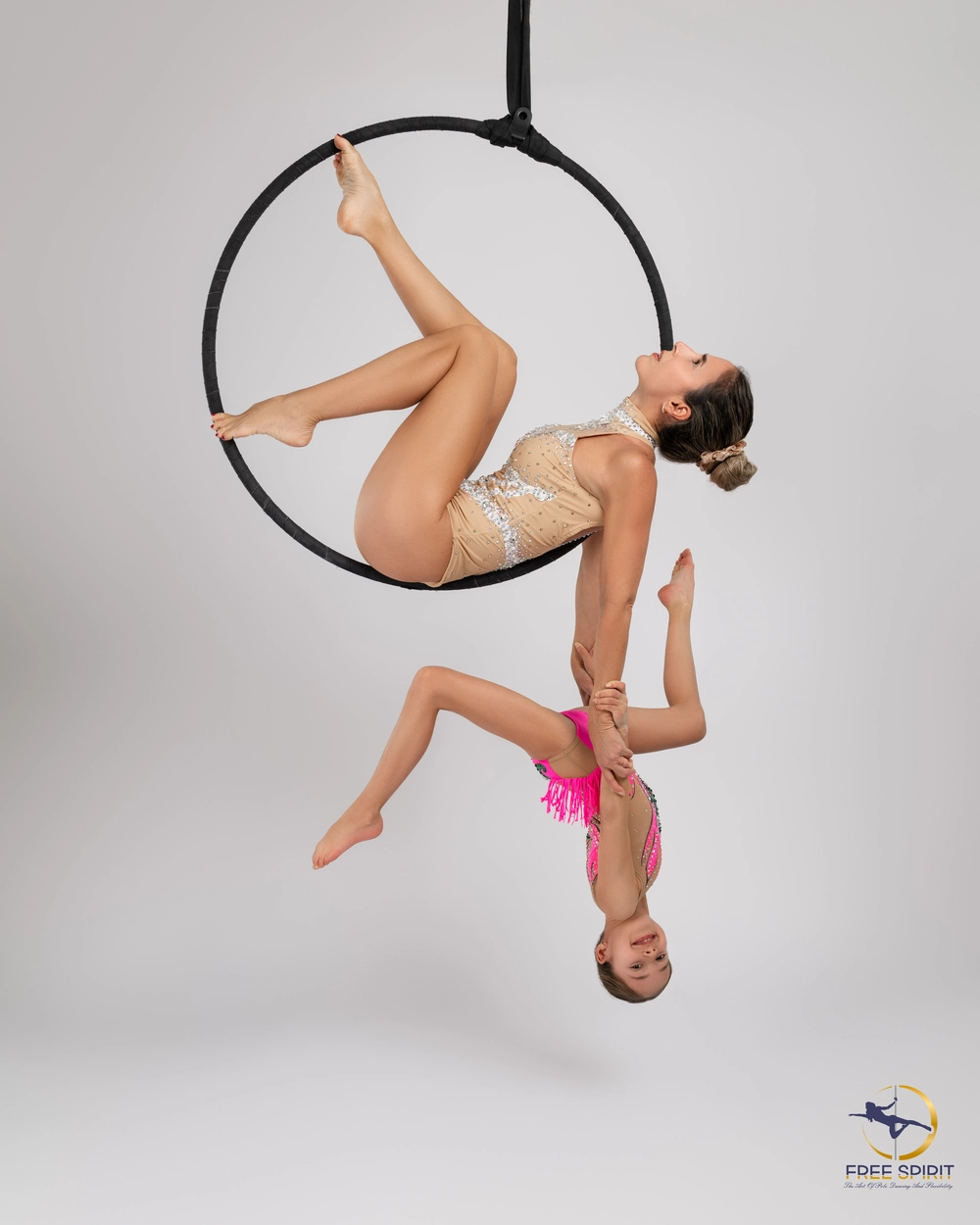
Aerial Hoop, also known as Lyra, combines aerial movement, strength, flexibility, balance and artistic expression.
Free Spirit's Montreux offering includes both Pole Dance and Aerial Hoop, giving students another way to explore aerial fitness and movement. (Free Spirit Pole Dance)
This can be especially interesting if you enjoy the combination of fitness + creativity + performance.

Montreux offers a beautiful setting on the Swiss Riviera, but you don't need to be an athlete or experienced dancer to begin.
You may simply be looking for:
A new fitness activity
A fun way to exercise
A creative hobby
Better strength
Improved flexibility
A supportive community
Something different from a traditional gym
Free Spirit Pole Dance is part of a wider Swiss community with locations in Mies, Gland, Bellevue, Montreux and Vevey. (Free Spirit Pole Dance)
The Montreux studio is listed as a dance school offering pole-focused training. Free Spirit Pole Dance Montreux
Free Spirit Pole Dance was founded by Giannina Galleres, whose journey from international tax law into professional pole sports and judging is an important part of the studio's story. (Free Spirit Pole Dance)
The Free Spirit approach combines technical development with movement, fitness, creativity and community.
For a deeper look at that journey, you can read:
From Mies to Montreux: The Free Spirit Pole Dance Story
This story explains how the Free Spirit community grew from its beginnings in Mies to five locations across Switzerland. (Free Spirit Pole Dance)
You don't need to be strong.
You don't need to be flexible.
You don't need to have danced before.
And you definitely don't need to know how to perform advanced tricks.
You only need to take the first step.
Your first Pole Dance class can introduce you to a completely different way of moving, exercising and challenging yourself.
At Free Spirit Pole Dance Montreux, you can discover:
Start at your level. Learn at your own pace. Enjoy every step.
Yes. You can start Pole Dance without previous dance or pole experience. Free Spirit offers progressive training for different experience levels. (Free Spirit Pole Dance)
No. You can develop strength, coordination and flexibility progressively through training.
Comfortable shorts and a fitted sports top are practical for many pole classes because skin contact helps with grip. Avoid applying body lotion immediately before class.
Some movements may feel challenging initially because they require new combinations of strength, coordination and body control. However, beginner training is designed to introduce skills progressively.
Yes. Previous dance experience isn't required for beginner training.
Pole Dance can provide full-body physical training involving strength, coordination, balance, mobility and body control. (Free Spirit Pole Dance)
Yes. Free Spirit offers Aerial Hoop alongside Pole Dance and other movement disciplines, depending on the current class schedule. (Free Spirit Pole Dance)
Free Spirit Pole Dance has locations in Mies, Gland, Bellevue, Montreux and Vevey. (Free Spirit Pole Dance)




Copyright ©2021-2024 Freespiritpoledance. All Rights Reserved.Made with ♥ by @inabilansari


